Contactless and maintenance-free
no mechanical contact parts, no wear, no misalignment effect — goodbye to frequent calibration
Covers the conveyor-belt volume measurement scenario: continuous material flow metering — a LiDAR mounted across the belt contactlessly scans the mate…
These issues raise operating costs, delay decisions, and create safety and settlement risks.
the unseen profile hides blockages and off-center loads until late — a safety and metering risk
Contact-based belt scales drift with wear and need frequent calibration, distorting production data; misalignment and tension changes shift the reading
disputed production numbers fuel arguments over shift assessment and cost
How It Works
Fully automated from data capture to output — no manual intervention.
Contactless LiDAR scanning of material profile
Cross-section × belt speed = flow rate
Cumulative volume & tonnage output
4-20mA / Modbus / OPC UA feed the control room live
Why Neuvition

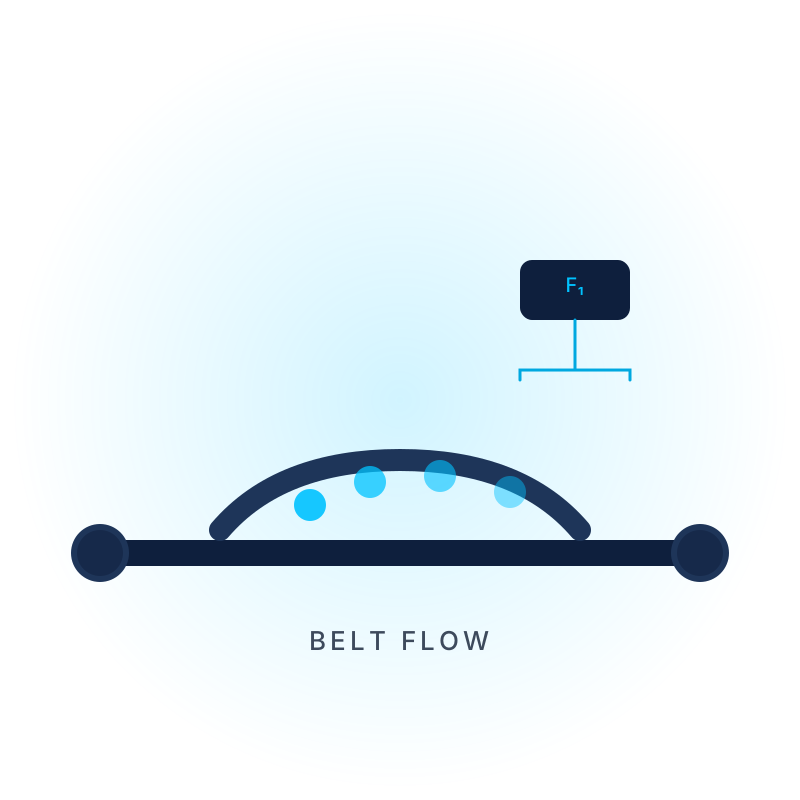
no mechanical contact parts, no wear, no misalignment effect — goodbye to frequent calibration
long-term stable accuracy with no drift source, calibrated once at installation
optional particle-size monitoring with a camera
real-time 3D display of the material profile makes off-center loading, material loss and blockages visible at a glance
standard industrial interfaces (4-20mA / Modbus / OPC / REST API) feed the control room with real-time production data
high scan rates of 25/50/100Hz (NEU-SL1-P160040E) for fast flow
Explore customer cases by industry
Real-time material flow monitoring and anomaly warning for the belt conveying system of a thermal power plant's coal handling system.
Yes for volume metering; for tonnage settlement, converted tons are output after density sampling calibration — most customers use it for output assessment and belt-scale calibration comparison.
Laser scanning covers the full belt width and tracks the profile dynamically, so misalignment does not affect volume calculation — the core advantage over belt scales.
IP67 protection plus dust filtering algorithms, designed for harsh mining and power-plant conditions.
Standard industrial protocols such as 4-20mA, Modbus and OPC UA, plus REST API for IT platforms.