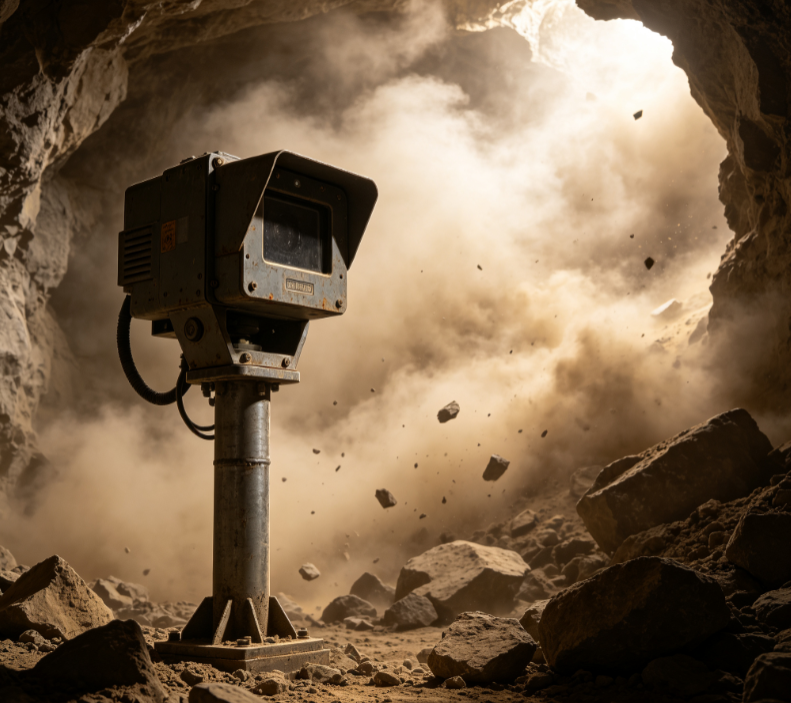
In industrial scenarios such as mines, ports, and cement plants, dust concentrations usually far exceed normal environments, posing a serious challenge to LiDAR measurement. This article analyzes how multi-echo LiDAR technology effectively improves data quality and measurement reliability in harsh environments.
How Dust Affects Laser Measurement
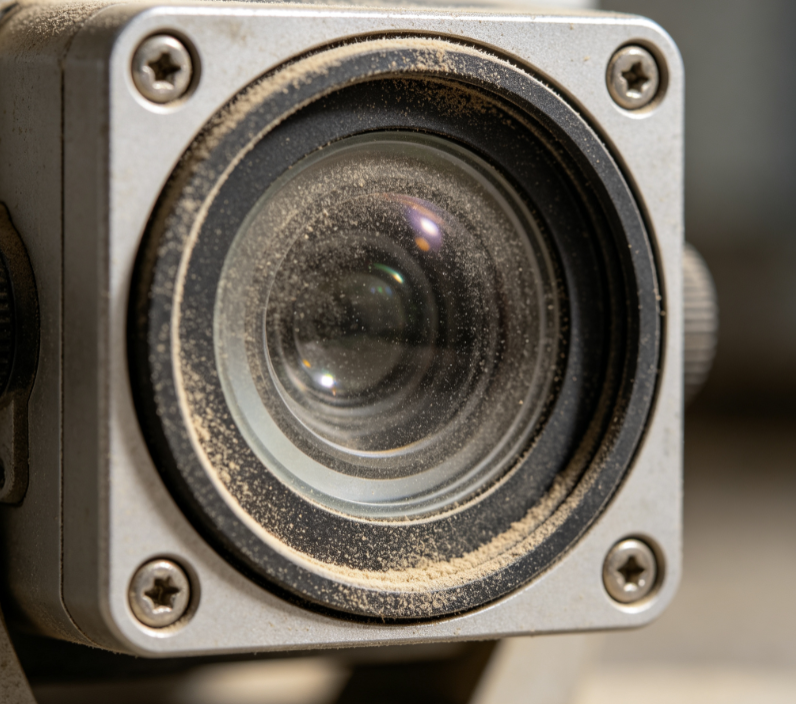
LiDAR measures distance by emitting laser pulses and receiving reflected echoes. In dusty environments, airborne particles cause three problems: first, laser pulses are scattered and absorbed during propagation, attenuating valid echo signals; second, dust particles themselves generate numerous stray echoes that form noise point clouds; third, fluctuating near-field dust concentration causes signal intensity variation that affects ranging accuracy.
Field data shows that at PM10 concentrations above 500 μg/m³, the effective data rate of single-echo LiDAR can drop below 60%, and volume measurement error increases by 3–5×.
Principles and Advantages of Multi-Echo Technology
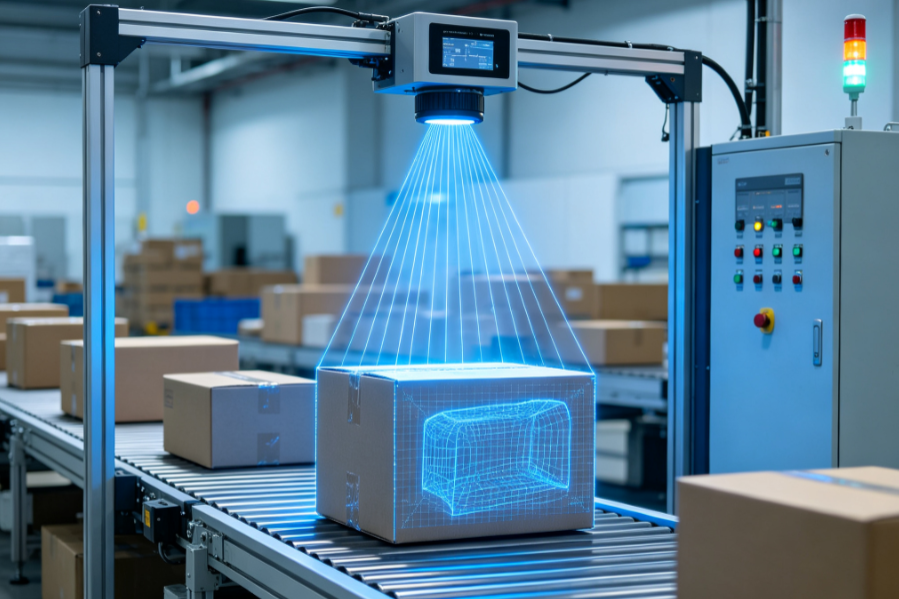
Multi-echo LiDAR records multiple echoes from a single laser pulse. When the pulse passes through a dust cloud, earlier echoes come from suspended dust particles while later echoes come from the target material surface. The CloudEngine engine processes multi-echo information intelligently:
Echo separation: Dust echoes are separated from target echoes by time-of-flight difference and intensity. Target echoes are typically stronger and arrive later and can be distinguished with adaptive thresholds.
Last-echo priority: In most dust scenarios, the last echo is most likely to come from the target surface. CloudEngine defaults to a last-echo strategy, combined with echo intensity validation of target authenticity.
Multi-echo fusion: For moderate dust concentrations, multiple echoes are weighted and fused — preserving target information while using intermediate echoes for noise estimation and correction.
Field Validation
In a comparative test at a cement plant raw-material warehouse with PM10 concentration around 800 μg/m³:
The single-echo device achieved a 52% effective data rate with 4.8% volume error; the multi-echo device (with CloudEngine processing) achieved a 94% effective data rate with 0.9% volume error. Multi-echo technology improved data reliability by over 80% in extreme dust conditions.
Tests also show that above 1500 μg/m³, even multi-echo technology cannot fully compensate for signal attenuation — at that point, air-purge devices or longer-wavelength LiDAR are needed to further improve penetration.
Related Reading
- More insights from our blog
- Explore Neuvition measurement systems
- Dynamic truck volume measurement solution
Get a Tailored Measurement Proposal
Want to learn how LiDAR volume measurement solves your real-world problem? Contact us for a custom proposal and budget estimate, or request a demo.
Field Data and Deployment Scenarios
In a typical coal yard deployment, multi-echo LiDAR with dust filtering algorithms runs continuously on coal-feed belts and stockpiling areas with high dust concentration. Measurement deviation from manual inventory is kept within 1%, and a single stockpile scan takes 1–5 minutes. For occlusion scenarios such as silos and deep hoppers, multi-echo technology also effectively recognizes secondary echoes, improving the completeness of material surface reconstruction. The system supports 4-20mA, Modbus, OPC UA, and other industrial interfaces for seamless integration with power plant DCS and coal yard management systems — enabling full-chain automation from measurement to decision.