Why Is Billing by Volume Becoming Mainstream?
In bulk transport scenarios such as mining, aggregates, grain, and earthwork, settlement is shifting from “by weight” to “by volume.” The fundamental reason: the density of loose bulk materials fluctuates significantly with moisture content and compaction, so converting weight to volume is often unreliable. This article compares truck load volume measurement with weighbridge weighing to help transport and trading companies make more accurate metering decisions.
The Limitation of Weighbridges: Density Fluctuation Is the Fatal Flaw
A weighbridge measures weight; to get volume you must multiply by density. But the density of coal, sand, and grain is not fixed: for the same truckload of coal, moisture content can differ by more than 10% between wet and dry seasons; for the same pile of aggregate, compaction during loading also changes density. This means the conversion of “weighed weight ÷ fixed density = volume” can be off by as much as 5%–15%, directly causing settlement disputes.
The Advantage of Volume Measurement: Direct Volume, No Density Dependency
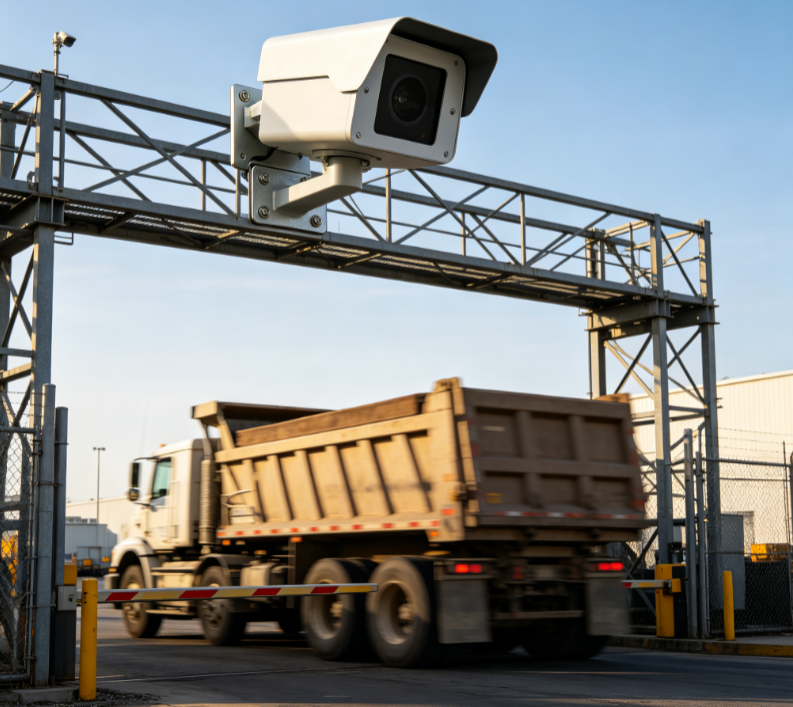
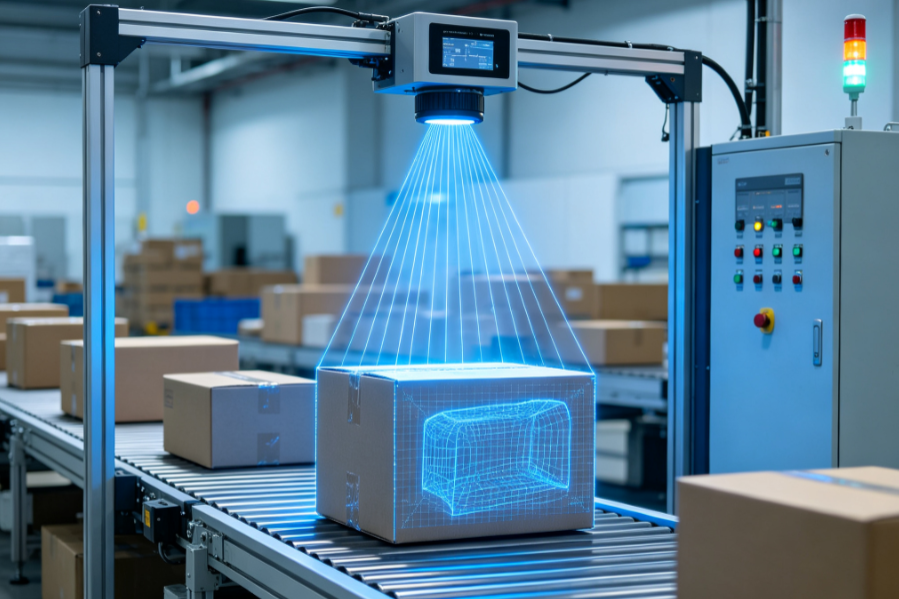
LiDAR 3D scanning directly measures the volume of material in the truck bed without density conversion, fundamentally eliminating density-related errors. Take the Neuvition NV-T200 Truck Load Volume Measurement System as an example: vehicles pass through the measurement area at a steady 5–15 km/h with no stopping — measured on the move — and a volume report is produced within 30 seconds. The system stores each truck’s point cloud and images for review and traceability at any time.
Key Differences
| Dimension | Weighbridge | LiDAR Volume Measurement |
|---|---|---|
| Measured quantity | Weight | Volume |
| Density dependency | Needs density conversion, high error | Direct measurement, no conversion |
| Measurement speed | Vehicle must stop | Measured on the move, no stopping |
| Data traceability | Weight records | Point cloud + images, traceable |
| Fraud resistance | Can be manipulated (planks, pressure tricks) | Load surface profile clearly visible |
How to Implement Volume-Based Settlement?
For volume-based settlement scenarios (e.g., earthwork billed per truck, mining raw ore billed by volume), volume measurement directly provides the settlement basis. For scenarios that still need weight (e.g., rail transport), volume data can be combined with density sampling calibration to convert to tons — a dual-channel approach of “volume as primary, weight as verification.” The two methods are not mutually exclusive; many customers use weighbridges for weight verification and LiDAR for volume settlement, cross-checking each other.
FAQ
Ready to automate volume-based settlement? Contact us for a truck volume measurement proposal and case materials.
Related Reading
- More insights from our blog
- Explore Neuvition measurement systems
- Static truck volume measurement solution
Get a Tailored Measurement Proposal
Want to learn how LiDAR volume measurement solves your real-world problem? Contact us for a custom proposal and budget estimate, or request a demo.
Industry Trend Toward Volume-Based Settlement
On the regulatory side, many municipal housing and urban management authorities have included volume-based metering of earthwork transport in digital supervision requirements, shifting settlement from manual estimation to system data. On the commercial side, trade settlement for aggregates, concrete, and mining raw ore is progressively moving to volume-based pricing, where volume data directly determines contract amounts. Choosing a volume measurement system with point cloud archiving and tamper-evidence capabilities not only resolves current metering disputes but also builds a traceable data asset for future regulatory integration and financing audits.
How Volume Measurement and Weighbridges Complement Each Other
For scenarios that need both weight and volume data, a dual-channel approach works: the weighbridge handles weight verification and transport compliance, while LiDAR volume measurement handles volume-based settlement — the two cross-check each other. In practice, this combination can significantly reduce settlement disputes.